On this page
- What a core tells you that a cylinder can't
- When concrete coring is actually required
- The low-cylinder path, step by step
- How a core is drilled and tested
- Four ways a core result gets thrown out
- Pavement cores: thickness and density
- Cores vs. non-destructive testing
- Existing buildings and Florida's milestone inspections
- When you shouldn't pay for coring
- Low breaks, a thickness question, or an old building?
- Frequently asked questions
Concrete core drilling uses a water-cooled diamond bit to cut a cylinder out of hardened concrete so a lab can test what's actually in the structure. It's required in three situations. The first is low cylinder breaks: ACI 318 calls for three cores per suspect test, and the concrete is accepted if they average at least 85% of the specified strength with no single core under 75%. The second is a spec or agency that needs slab thickness, pavement thickness, or asphalt density verified. The third is an engineer evaluating an existing structure with no reliable records. A strength core is normally cut with a 4-inch bit from concrete at least 14 days old and broken within seven days of drilling. Here's when coring is actually required, how a core gets from the wall to the compression machine, and the cases where you shouldn't be paying for one.
What a core tells you that a cylinder can't
A concrete cylinder is a sample of what came off the truck. It gets cast at the pour, cured in a controlled tank, and broken at 7 and 28 days. It tells you whether the mix was right. It doesn't tell you what happened after the concrete left the chute. Water might have been added at the truck, the vibration might have been poor, or the curing on a 95-degree August afternoon might have been bad.
A core is the structure itself. It comes out of the slab, wall, or column with every placement and curing decision baked in. That's why it's the evidence of last resort when the cylinders and the concrete disagree, and why it's the only direct way to measure strength in a building that's already standing. It's the in-place half of our concrete and asphalt testing in Florida. Cylinders and fresh-concrete tests catch problems at the pour, and cores answer the questions the cylinders can't.
When concrete coring is actually required
Most coring falls into one of five situations. In the first three, a code or a spec usually forces the issue. In the last two, an engineer decides.
| Situation | What the core answers | Governing standard | Who usually orders it |
|---|---|---|---|
| Low cylinder breaks | Is the in-place concrete strong enough, even though the cylinders weren't? | ACI 318 (strength evaluation), ASTM C42 | Structural engineer of record, building official |
| Slab or rigid pavement thickness | Did the contractor place the thickness that was paid for? | ASTM C174, project spec | Owner, agency, paving spec |
| Asphalt density and thickness | Was the mat compacted and placed to spec? | ASTM D979 sampling, AASHTO T 166 density | FDOT, county and city paving specs |
| Existing structure, no reliable records | What strength can a renovation, addition, or change of use be designed to? | ACI 562, ACI 214.4R, ASTM C42 | Engineer doing the evaluation |
| Damage, distress, or durability questions | Why is it cracking, spalling, or corroding, and how deep does it go? | ASTM C856 petrography, chloride and carbonation testing | Forensic engineer, condo or building owner |
The first row is the one that pays most of the coring bills on commercial work, so it's worth understanding exactly how it's triggered.
The low-cylinder path, step by step
ACI 318 accepts concrete strength on two criteria. The average of every three consecutive strength tests has to meet the specified strength (f'c), and no single test can fall more than 500 psi below f'c (or below 90% of f'c on mixes specified above 5,000 psi). A "test" is the average of two 6-by-12-inch cylinders or three 4-by-8s, broken at the age the spec calls for.
Miss the three-test average and the fix is usually at the plant: adjust the mix so the next placements come up. Miss the individual-test limit and the code says to investigate the concrete that test represents. That's where coring comes in:
- Three cores for each low test, taken from the placement that test represents, drilled per ASTM C42.
- The acceptance math: the concrete is considered structurally adequate if the three cores average at least 85% of f'c and no single core comes in under 75%. On a 4,000 psi mix, that's a 3,400 psi average and no core under 3,000 psi.
- Erratic results can be re-tested. If one core is clearly off because of a void, a crack from drilling, or a bad cap, ACI 318 permits additional cores from the locations that core represents.
- If the cores still fail, the engineer of record moves to structural analysis or a load test before anyone talks about removal.
The 85% criterion isn't the code going easy. A core is drilled, not cast. It has cut aggregate at its sides, it cured in the structure instead of a tank, and it almost always breaks lower than a standard-cured cylinder from the same truck. The code builds that difference in. A pour that passes on cores is a pour that passes. It's the same evaluation sequence we lay out on our ACI-certified concrete testing service page, and most low breaks resolve somewhere along it without a jackhammer.
How a core is drilled and tested
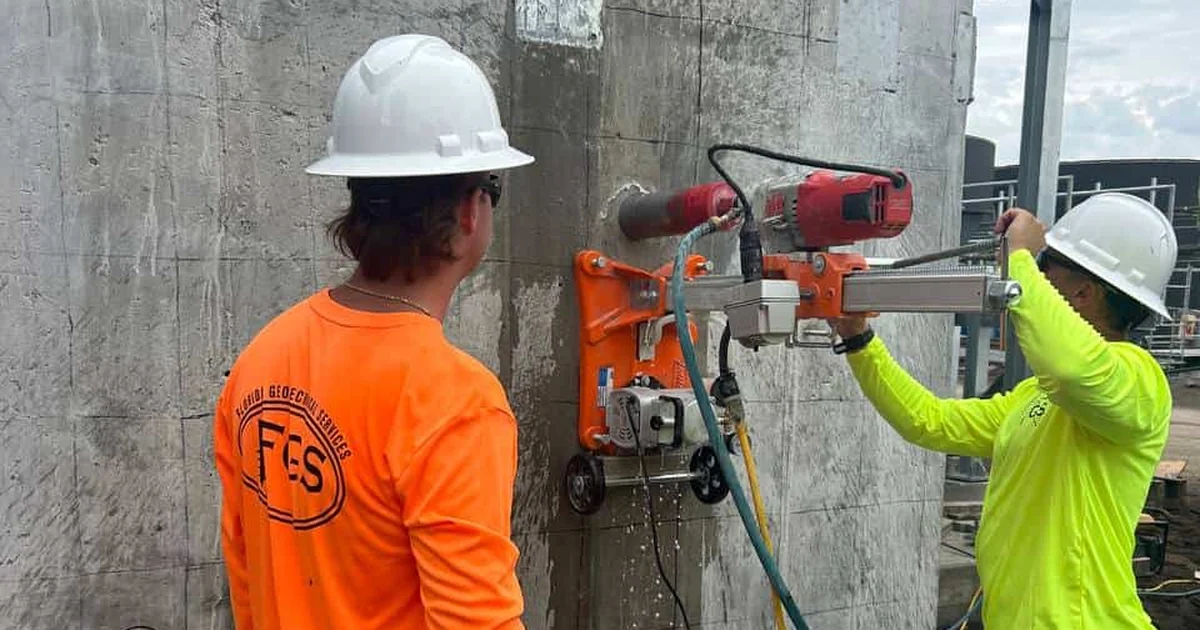
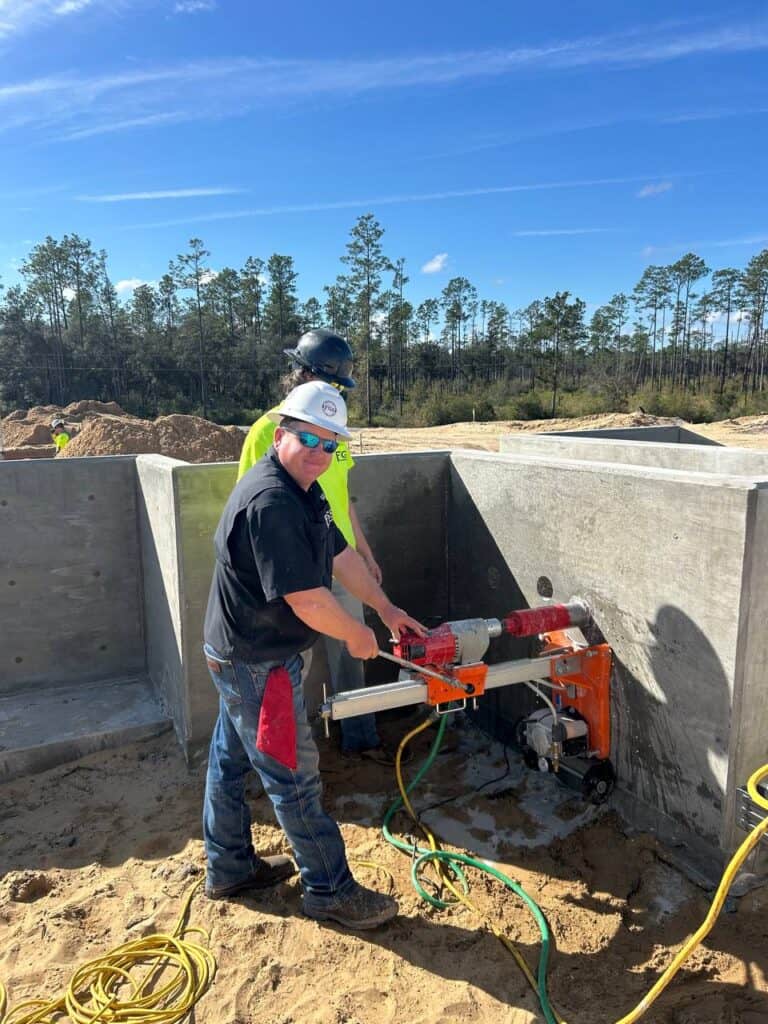
The equipment is simple. A diamond-tipped core barrel sits on a drill motor, and the motor rides on a rig that's anchored or vacuum-mounted to the slab or wall so the barrel can't wander. Water runs through the barrel the whole time to cool the bit and flush the cuttings out as gray slurry. The procedure is where the result is made or lost.
- Pick the locations. Cores come from the placement the low test represents, away from edges, joints, and anything the engineer doesn't want weakened.
- Scan before you cut. A GPR or electromagnetic scan marks the rebar, conduit, and post-tension tendons so the barrel goes between them.
- Drill perpendicular and steady. The barrel goes square to the surface at a steady feed. A core drilled at an angle, or one that's been rocked to break it free, carries damage into the lab.
- Size it right. A strength core is normally cut with a nominal 4-inch bit, giving about a 3.75-inch core. That's at least twice, and preferably three times, the largest aggregate. Most Florida structural mixes use crushed limestone in the #57 size, so 4 inches covers it.
- Get the length. The ideal core is about twice as long as it is wide. Shorter cores get a correction factor (see the table below), and a core shorter than its own diameter isn't tested for strength at all.
- Seal it. Wipe off the drilling water, let the surface dry briefly, and seal the core in a plastic bag. Unless the spec says otherwise, ASTM C42 tests it no sooner than 48 hours after the last wetting and no later than seven days after drilling.
- Trim, cap, and break. The lab saws the ends square, measures it, caps it, and breaks it in compression. The report gives the corrected strength and notes anything in the core that affected the result.
- Fill the hole. Clean, damp, and packed with non-shrink grout or a repair mortar the engineer approves. On a structural member that decision belongs to the engineer, not the driller.
| Core length ÷ diameter | ASTM C42 strength correction | Example: 4,000 psi raw break |
|---|---|---|
| 2.00 (the target) | None (1.00) | 4,000 psi |
| 1.75 | 0.98 | 3,920 psi |
| 1.50 | 0.96 | 3,840 psi |
| 1.25 | 0.93 | 3,720 psi |
| 1.00 | 0.87 | 3,480 psi |
| Under 1.00 | Not tested for strength | n/a |
That last row is why a 4-inch residential slab is a poor candidate for strength coring. A 3.75-inch core through a 4-inch slab barely clears 1.0, and after the ends are trimmed it may not. Thickness and density cores don't have that problem, because they're measured, not broken.
Four ways a core result gets thrown out
Steel in the core
A piece of rebar in a strength core changes how it breaks. Standard practice is to scan first and core between the bars. If a core comes out with steel in it, the lab notes it and the engineer decides whether it counts. Often it doesn't, and you pay for another one.
Too short
Under a 1-to-1 length-to-diameter ratio, the core isn't a valid strength specimen. On thin slabs that's a geometry problem, so it needs to be solved in the scope before the rig shows up, not explained in the report.
Too early
Concrete is generally at least 14 days old before it's cored, because younger paste can tear away from the aggregate under the bit. Coring a 7-day pour to settle an argument early usually just starts a second argument.
Handled wrong
A core left in the sun on a tailgate, never bagged, or soaked in a bucket isn't in the moisture state ASTM C42 calls for, and a sharp reviewer will catch it. The chain from drill to lab matters as much as it does for cylinders.
Pavement cores: thickness and density
On roads and parking lots, the question is usually "how thick and how dense?" rather than "how strong?" Asphalt density cores are sampled per ASTM D979 and measured for bulk specific gravity. That gives the in-place density as a percentage of the mix's maximum, and it's how many FDOT and municipal specs accept a paving lift. Concrete pavement and slab thickness cores are measured per ASTM C174. A thickness shortfall on a paid-by-the-inch item turns into a pay adjustment fast.
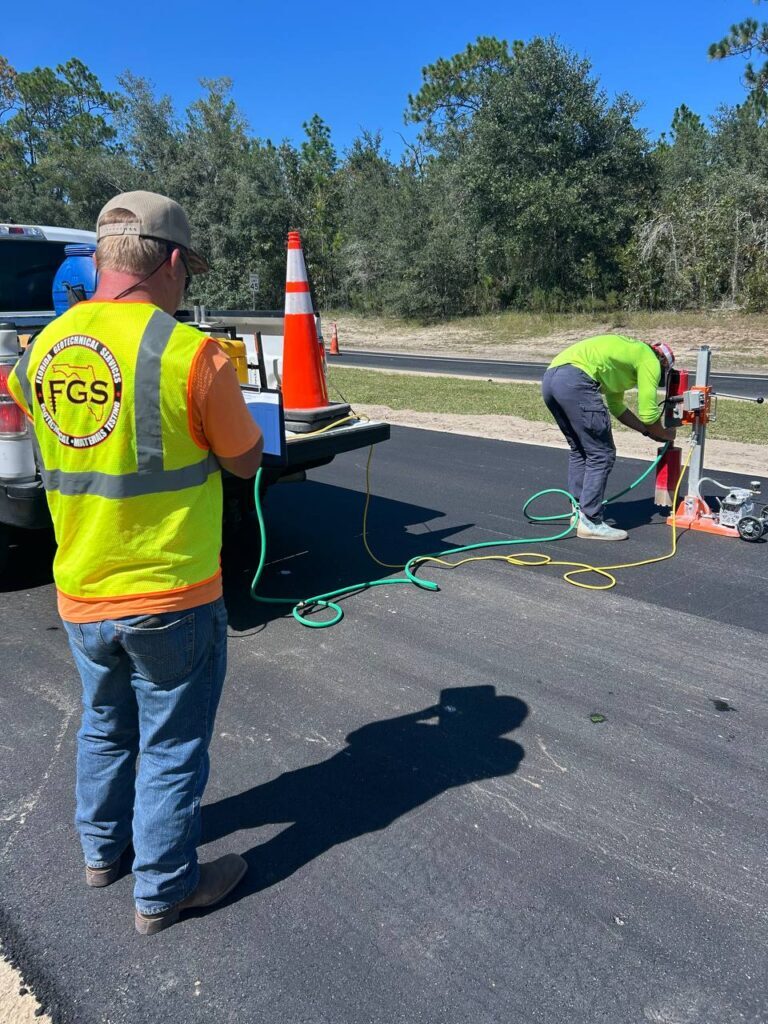
On an existing pavement that's failing, the same cores do forensic work. They give actual layer thicknesses, the condition of the base, and whether the subgrade gave up first or the asphalt did. We use them alongside radar and borings on every pavement design and evaluation in Florida, because a rehab design built on as-built drawings instead of real thicknesses is a guess.
Cores vs. non-destructive testing
Coring is destructive, so it's fair to ask whether something gentler would do. Sometimes it will. Here's how the options compare.
| Method | What it measures | Good for | Limits |
|---|---|---|---|
| Rebound hammer (ASTM C805) | Surface hardness | Fast comparisons between areas, finding the weak zone to core | Not a strength value on its own; it has to be correlated to cores |
| Ultrasonic pulse velocity (ASTM C597) | How fast sound crosses the member | Uniformity, internal cracking, honeycombing | Moisture and steel skew it; it also needs cores to calibrate |
| GPR scan | Steel, tendons, conduit, thickness, voids | Making coring safe, mapping slab thickness between cores | Doesn't measure strength at all |
| Drilled core (ASTM C42) | Actual compressive strength, thickness, what's inside | Acceptance decisions, design values, forensics | Destructive; leaves a hole to repair |
The practical pattern is to use the non-destructive methods for coverage and the cores for proof. A rebound-hammer survey can tell you which bay of a deck is weakest, and three cores from that bay tell you whether it matters. For any decision that ends up under a P.E.'s seal, the core is the evidence.
Existing buildings and Florida's milestone inspections
Coring isn't only for new construction. When an engineer has to put a number on an existing structure, cores are how that number gets made. That includes a renovation that adds load, a change of use, or a 1970s building with no surviving drawings. ACI 562, the code for assessing and repairing existing concrete, lets the engineer base the evaluation on core strengths instead of guessing at the original design strength.
Coastal Florida adds a durability question. Chloride from salt air works into the concrete until it reaches the rebar and starts the corrosion that spalls balconies and garage soffits. Cores are what chloride-profile testing and petrographic examination (ASTM C856) are run on. Since the post-Surfside law, condo and co-op buildings three stories and up go through milestone inspections under Florida Statute 553.899. When the first phase turns up substantial structural deterioration, the second phase can include destructive testing at the inspector's direction, and in practice that usually means cores. Those cores and lab results fall under our construction materials testing programs across Florida, with the testing feeding the engineer's evaluation.
When you shouldn't pay for coring
A firm that sells coring by the hole won't tell you these. We will:
- Your cylinders passed. Coring a pour that met both ACI 318 criteria "for peace of mind" is money spent proving what the record already shows. The exception is a real field problem that the cylinders couldn't see, like a freeze-up, a missed vibration, or a placement that sat too long.
- One test missed the average but not the individual limit. That's usually a mix adjustment at the plant, not an investigation of the concrete already in place.
- A cracked residential driveway. The cause is almost always joints, subgrade, or shrinkage. A core won't tell you anything a good look and a few questions won't.
- You want a strength number from a 4-inch slab. Geometry works against you. Ask whether thickness cores, a rebound survey, or a load-based evaluation answers the actual question.
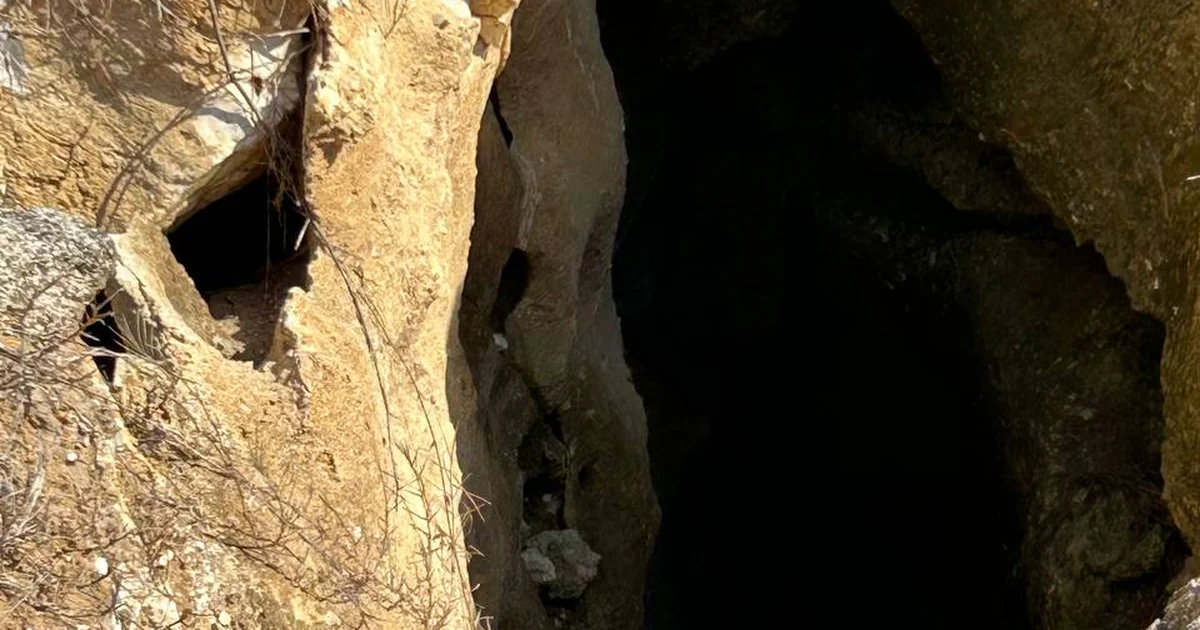
- You need a rock core, not a concrete core. Diamond coring the Florida limestone under a foundation or a sinkhole is a different job on a different rig. It's part of our geotechnical drilling services in Florida, with RQD and recovery logged by the drill crew.
Low breaks, a thickness question, or an old building?
Send us the spec, the cylinder reports, the drawings if they exist, and what you're trying to prove. A Florida P.E. will tell you whether coring is the right answer or whether the record already settles it, before anyone sets up a rig. We have our own core rigs and crews and our own CMEC-accredited lab in Ocala. Reports go out within 24 hours of testing, and we quote inside 48 hours. Start with the free quote form or call (352) 619-9292. The full testing menu is on our concrete and asphalt testing services page.