We Don’t Sell the Grout
FGS investigates, designs the recommendation, and monitors the work. We don’t pump grout and we don’t get paid by the cubic foot. That independence is the whole point of having an engineer on site.

Compaction Grouting · Cap Grouting · Post-Grout Verification
Independent compaction grouting monitoring for Florida sinkhole repairs. Point-by-point logs, post-grout verification borings, P.E.-sealed. Call (352) 619-9292.
Independent Grouting QA · Engineer-Verified Remediation
When our borings find a cavity, a raveling zone, or soft soil over limestone, the fix is usually grout. The grouting contractor pumps it. We watch every point, log every stage, and verify with post-grout borings that the ground actually got stabilized — because a grouting program nobody checked is just a pile of invoices.
FGS investigates, designs the recommendation, and monitors the work. We don’t pump grout and we don’t get paid by the cubic foot. That independence is the whole point of having an engineer on site.
Injection depth, grout volume, pressure, slump, and structure movement — recorded at every stage of every point, as it happens. Not reconstructed from the contractor’s daily sheet a week later.
Post-grout SPT borings confirm the loose zones were densified. Then the same engineer who wrote the recommendation documents that the work met it. One chain, one set of numbers, one signature.
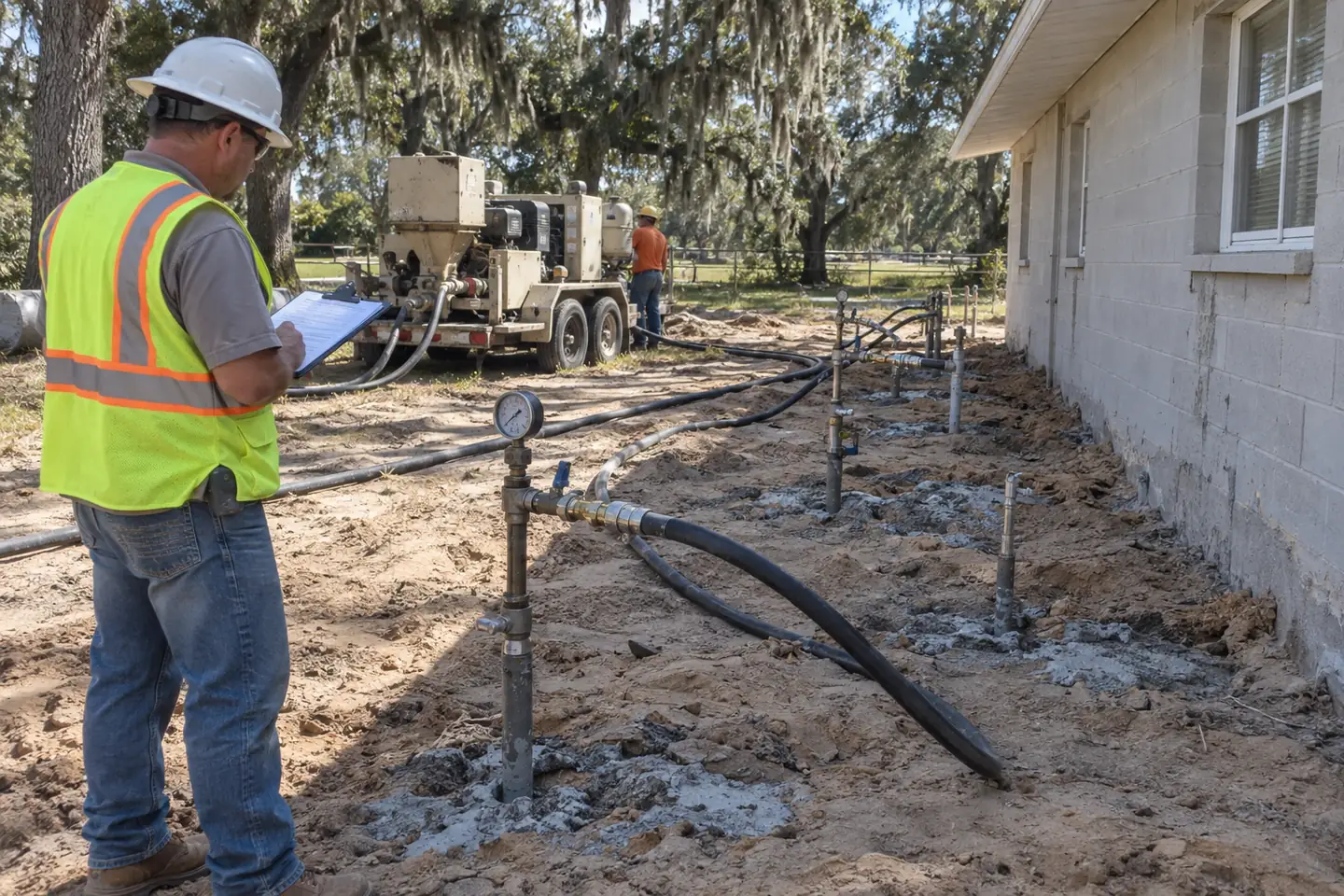
Grouting is the most common way Florida sinkhole activity gets stabilized, and it’s also the easiest remediation to do badly without anyone noticing. Everything that matters happens 20 to 60 feet underground, inside a pipe nobody can see down. From the surface, a well-executed compaction grouting program and a sloppy one look almost identical: a pump trailer, some hoses, a row of steel pipes, grey spatter on the sand. The difference only shows up in the numbers — how deep each pipe went, how much grout each stage took, what pressure it refused at, and whether the house moved while it was happening.
Those numbers are exactly what an independent monitor exists to capture. The contractor has a production schedule and a crew to keep moving. The homeowner, the insurer, and the lender need to know the repair followed the engineer’s design. Florida’s sinkhole statute (§627.707) ties insured stabilization to the professional engineer’s recommendations — and a recommendation is only worth what the field verification proves was built.
That’s the job FGS does on grouting projects: design the program from our own sinkhole investigation data, sit on the site while the grout goes in, and confirm afterward that the target zones were actually treated.
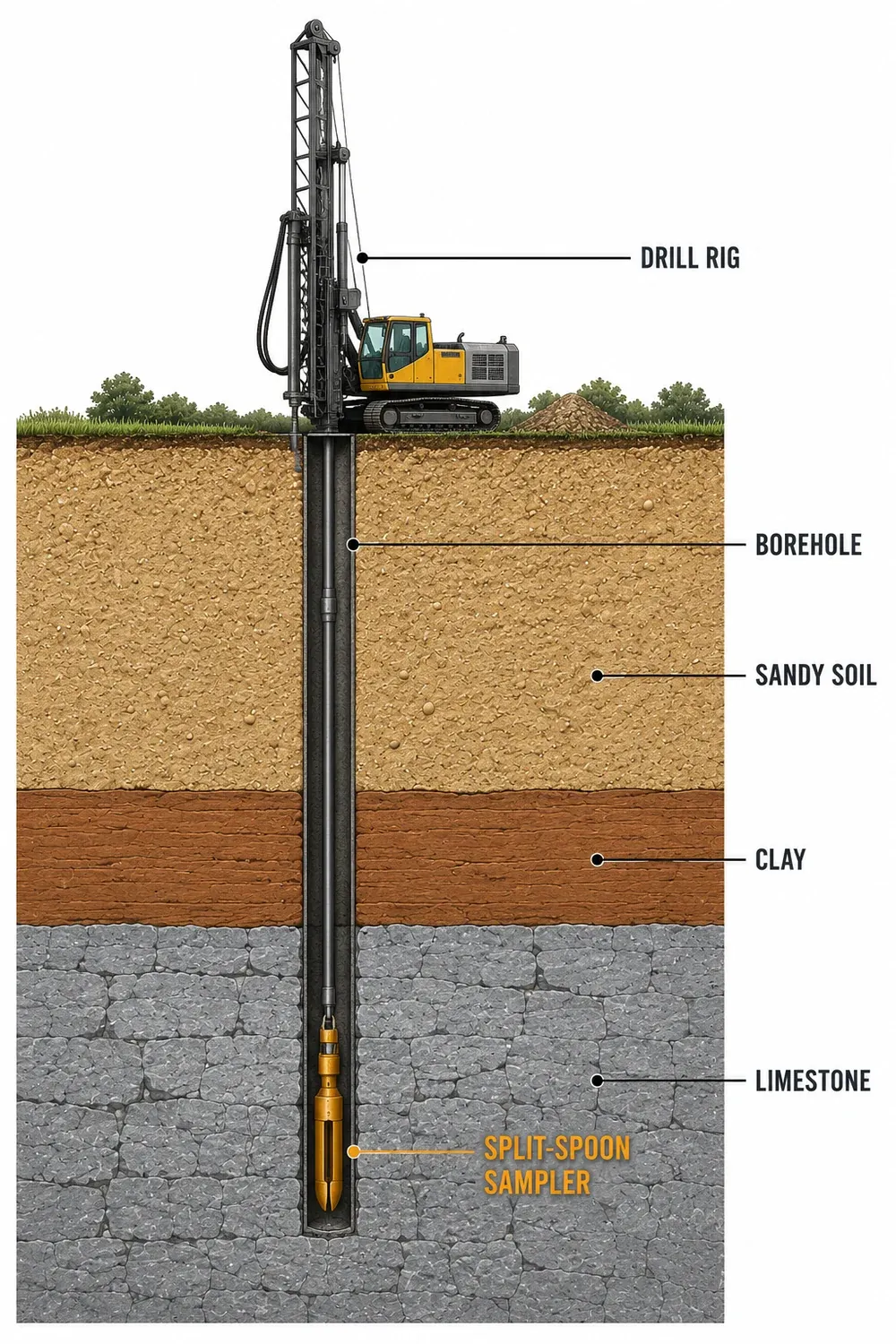
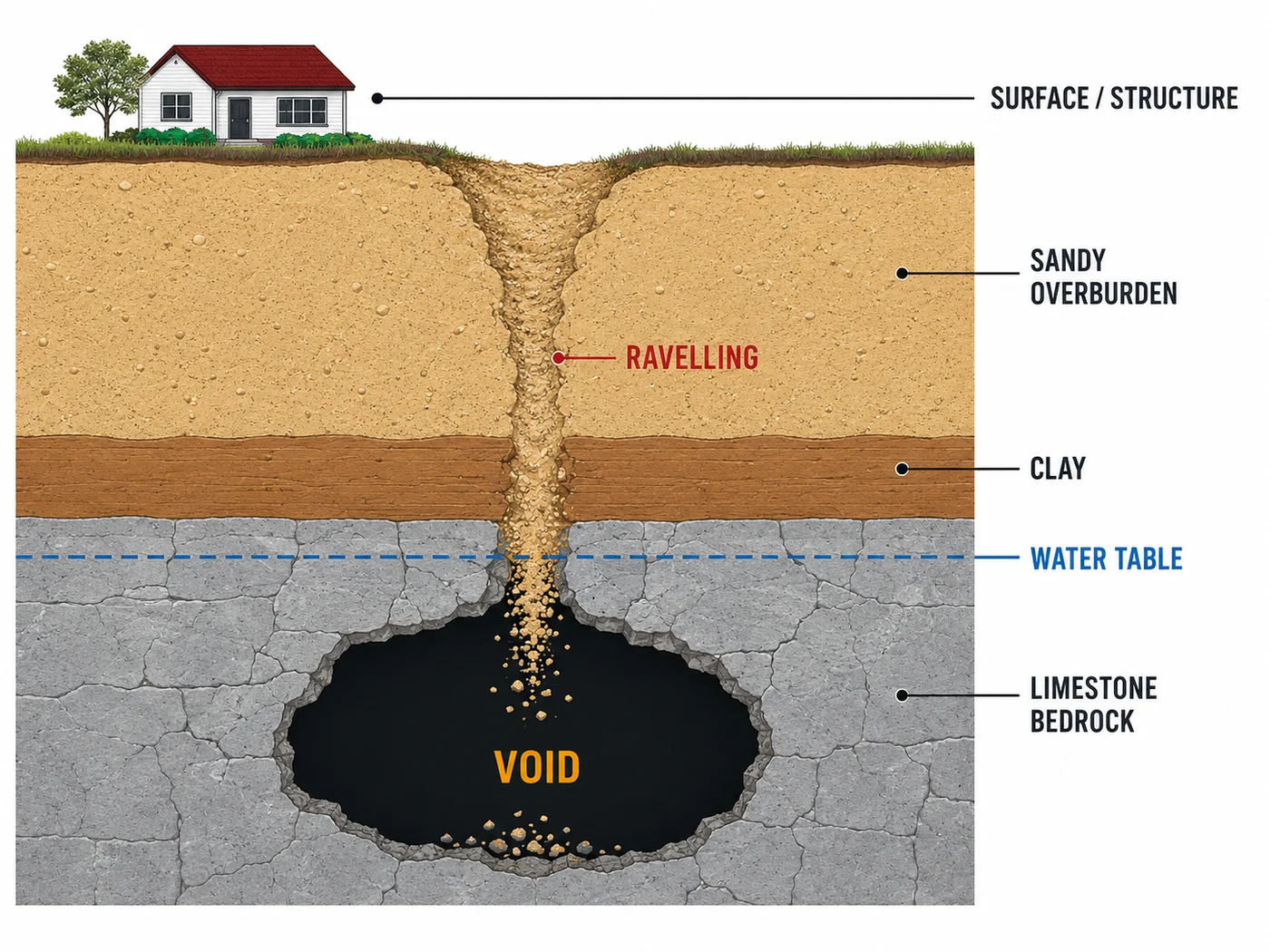
Most of our grouting work starts in the drill log. During an SPT boring, a cavity or raveling zone announces itself in a handful of ways the driller and engineer know to watch for: the rods drop under their own weight, blow counts fall to weight-of-hammer, drilling fluid suddenly disappears into the formation, or soft, disturbed soil turns up directly over the limestone surface. Any one of those is a flag. Several together in the same boring are a finding.
Once a boring shows it, the questions change. How big is the affected zone? Is the overburden raveling into the rock, or is it an old, stable, infilled feature? Does the structure need stabilization, or does the foundation design just need to account for it? When grouting is the answer, the engineering recommendation lays out the treatment: grout point layout and spacing, target depths, grout type and mix, stage length, refusal criteria, and the movement limits for the structure. That document is what the grouting contractor bids — and what we hold them to. More on how we find these features in the field on our geotechnical drilling page.
A grouting monitor isn’t there to watch the pump run. The value is in the record — a point-by-point log that shows the design was followed and flags the moment it isn’t.
Each injection pipe checked against the design layout, and the depth it reached recorded. A pipe that stops short of the limestone surface never treats the zone that matters.
Slump tested on the low-mobility grout as it arrives and during the job. Grout that’s too wet travels through fractures instead of building a bulb and densifying the soil around it.
Pump strokes converted to cubic feet and logged stage by stage as the pipe is withdrawn. High takes mark the voids and loose zones; the pattern across points maps the problem.
Gauge pressure recorded at each stage and at refusal. Pressure that spikes immediately, or never builds at all, tells us something about the ground the design needs to hear.
Every stage has to stop for a reason the design allows: pressure, volume limit, or surface movement. We confirm which one it was, stage by stage, so stages aren’t cut short to keep the crew on schedule.
Elevation readings on the slab and foundation before, during, and after injection. Compaction grout can lift a house; the monitor’s job is to stop a stage before it cracks one.
Florida sinkhole remediation isn’t one technique. The method depends on what the borings found and where the problem sits in the profile.
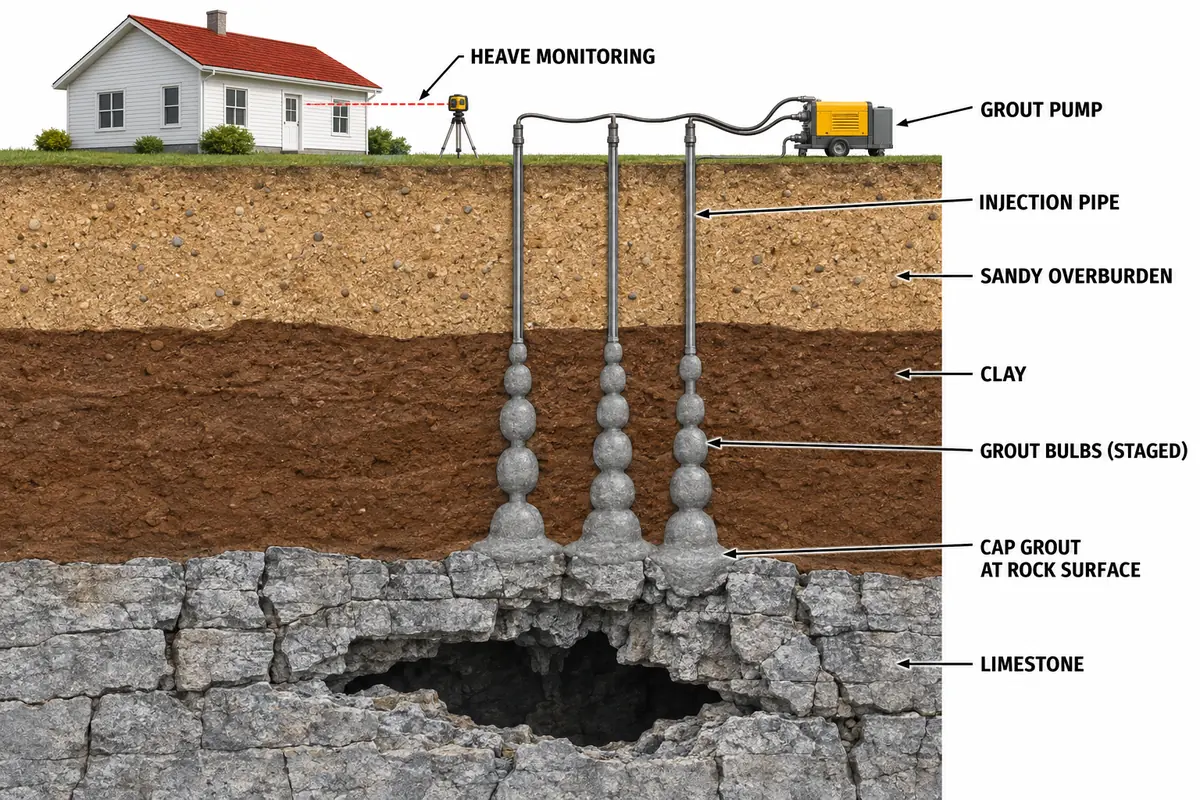
The workhorse for residential and light commercial sinkhole repair. A stiff, low-mobility grout is pumped under pressure through pipes driven to the limestone surface, then injected in stages as the pipe is pulled up. Each stage forms a bulb that displaces and densifies the loose, raveled soil around it. It’s the method most sensitive to stage length, grout consistency, and refusal discipline — which is why it’s the one that most needs monitoring.
Where the overburden is raveling down into openings in the limestone, grout placed at the soil-rock interface seals the throat the sand is draining through. Cap grouting often runs ahead of compaction grouting in the same program. The monitoring question is whether the grout actually reached and sealed the rock surface — pipe depth and take at the bottom stage tell that story.
Shallow-zone treatment: filling voids directly beneath slabs and footings and stabilizing loose soil within a few feet of the foundation. It pairs with deeper grouting but doesn’t replace it. A slab that’s been foamed back to level with the raveling zone 40 feet down untouched is a cosmetic repair, not a stabilization.
Stormwater ponds, roadway sinkholes, and building pads where site investigation found an open cavity. Higher-mobility fill grouts, large volumes, and a different set of controls — mostly about confirming the void is actually filled rather than the grout disappearing into the aquifer. Our construction materials testing crews run the grout sampling and strength testing.
Logs prove the work followed the design. Verification proves the design did its job.
Borings placed between injection points after grouting, compared against the pre-grout borings. Blow counts that climbed from weight-of-hammer to firm in the treated zone are the clearest evidence the ground was densified.
The engineer reviews the full point-by-point record against the design. Anomalies — a point that took five times its neighbors, a row that refused early — get explained or get follow-up points before the crew demobilizes.
Grout samples cast in the field and broken in our accredited in-house lab, so the material in the ground matches the material in the spec. See our soil and materials lab.
Structure elevations after grouting compared with the baseline, documenting the house wasn’t damaged by the repair meant to protect it.
A written summary of the program as built: points, depths, volumes, pressures, verification results, and the engineer’s conclusion, signed and sealed by a Florida P.E.
The repair is being paid for either way. Monitoring is how you know the money went into the ground and not just onto an invoice.
Independent confirmation that stabilization followed the engineer’s recommendations, with a record that holds up in a dispute.
Contemporaneous field records, not after-the-fact reconstruction, when a repair ends up contested.
Pre-construction ground improvement where site investigation borings found cavities under a planned building pad.
Grouting contractors and GCs who need an engineer of record to document the program for the permit, the owner, or the lender.
Roadway, right-of-way, and stormwater pond sinkholes where public-agency specs call for engineering oversight of the fill.
The repairs that fail aren’t usually a bad method. They’re a good method executed without controls. The problems we catch most often in the field:
Every one of those is invisible from the surface on the day and obvious in the record — if someone was keeping one. For homeowners still figuring out whether they have a sinkhole at all, start with our guide to sinkhole warning signs in Florida. For why this is such a Central Florida problem in the first place, see Florida’s Sinkhole Alley explained. And where the answer is a deep foundation rather than ground improvement, that’s foundation engineering.
A sinkhole report recommending grouting, a contractor ready to mobilize, or a cavity turned up during site investigation — send us what you have and we’ll tell you what monitoring the program needs. Before the first pipe goes in is the time to set it up.
FAQ
They can keep logs, and good contractors do. But the party getting paid by the cubic yard is not the party that should certify the ground was stabilized. An independent monitor has no stake in how much grout goes in or how fast the crew finishes — only in whether the program matched the engineering recommendation.
A typical single-family program runs from a few days to a couple of weeks, depending on the number of points, the depth to limestone, and how much grout the ground takes. High-take points slow things down, and that's often where the real problem was. We're on site whenever grout is being injected.
Post-grout verification borings. We drill between the injection points after grouting and compare the blow counts against the pre-grout borings. Loose, weight-of-hammer soil that now shows firm resistance in the treated zone is direct evidence the ground was densified. That's backed by the point-by-point record and a final elevation survey of the structure.
It can if nobody's watching. Compaction grout is pumped under pressure and can lift a slab or foundation. That's why movement limits are written into the design and why the monitor tracks elevations during injection and stops a stage when movement approaches the limit. Controlled, monitored grouting shouldn't crack anything.
Yes, with a caveat. We'll review the existing investigation and recommendation first. If the design is sound, we monitor to it. If we see gaps — no borings deep enough to find the rock surface, no refusal criteria, no movement limits — we'll tell you before the grout goes in, not after.
Get started
Tell us about your project and we'll get right back to you. Industry-leading turnaround on stamped reports, fieldwork, and lab results.
Prefer to talk? (352) 619-9292
Thanks — we've got it and we'll be in touch within one business day.
Need it now? Call (352) 619-9292.
Statewide service area
FGS delivers sinkhole grouting monitoring across Central and North Florida from our Ocala lab. Explore the service in the communities we cover most: